
Background
Kerf Labs’ K1 is a desktop diode engraver for wood, leather, slate and card, made for crafters, small studios and makers.
Challenge
Buying doubts cluster around what it engraves, whether it cuts, whether it needs ventilation, and whether it’s safe. Bury those in a long manual and people leave before ordering.
Our Role
- Product Positioning
- Web Design
- Frontend Development
Solution
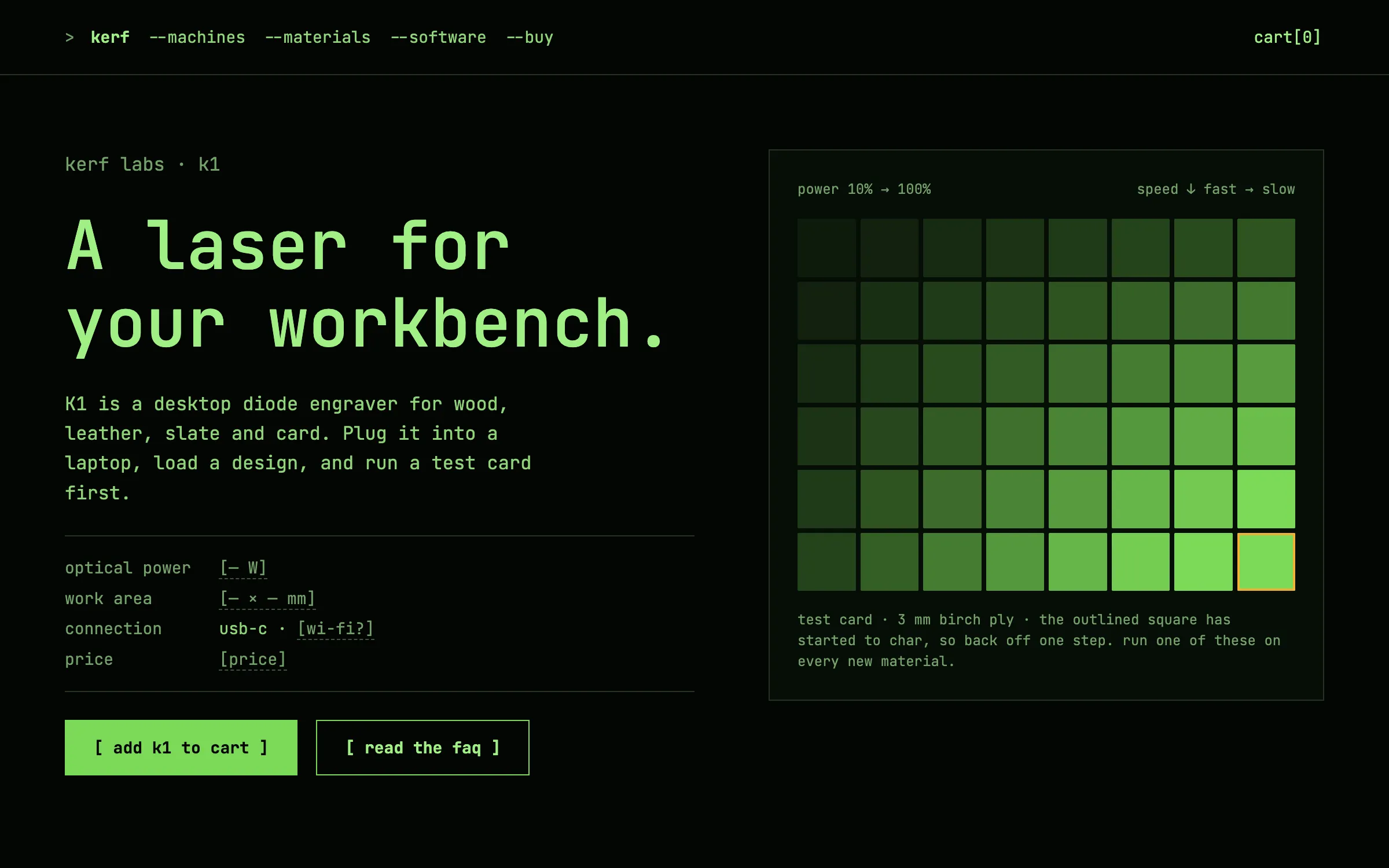
A terminal interface is the brand language: monospace type, command-style navigation and phosphor green. The hero shows a power-by-speed test card to model the “run a test card first” habit, and the body is a set of expandable FAQs answering buying doubts one by one.
The test card as hero
An 8 × 6 grid of power and speed swatches outlines the square that has just started to char—a product demo that also teaches good practice.
An FAQ-led product page
Materials, cutting, ventilation, safety, software, and box and warranty, in buying order—answers state the limits, not only the strengths.
A command-line voice
Details like “$ kerf --faq” and “cart[0]” land with the target audience while keeping information dense.
Frequently asked questions
The questions we’re asked most about this project’s design choices and delivery.
Why is the laser engraver’s product page built around an FAQ?
Before buying an engraver, people always ask the same things: what it engraves, whether it cuts, whether it needs ventilation, whether it’s safe. Expandable answers in buying order that state the limits, not just the strengths, keep people longer than a long manual.
Why a test card in the hero?
A power-by-speed test card is good laser practice: run one on every new material and find the square that has just started to char. In the hero it’s both a product demo and a lesson in using the machine well.
Why a command-line style?
Crafters and makers feel at home with a terminal. Monospace type, “$ kerf --faq”-style navigation and phosphor green land with the target audience while keeping information dense.
How long does a hardware product storefront take?
Single-product hardware sites have focused content, so they usually launch in 3 to 5 weeks, with payments and orders on Shopify or Stripe Checkout. The client supplies PDFs such as the material guide and safety sheet, and we handle layout and downloads.
Have a similar project in mind?
Tell us your goals and we'll reply within one business day.
Book a consultation